
Onboarding and playbooks
Bereavement support playbook
A playbook for supporting someone after a death: their manager lifts the work, HR explains leave and support, and gentle check-ins as they return.
New playbook. Opens a new playbook with these steps and timings. Each person’s steps wait for your approval before they send.
When someone loses a person close to them, the worst outcome is silence or a form at the wrong moment. A few planned steps keep the support kind and consistent.
This playbook starts when HR hears of the loss. The manager and HR act first, and the person hears one short message with no tasks.
Shuffl · HR by the numbers
Support after a loss

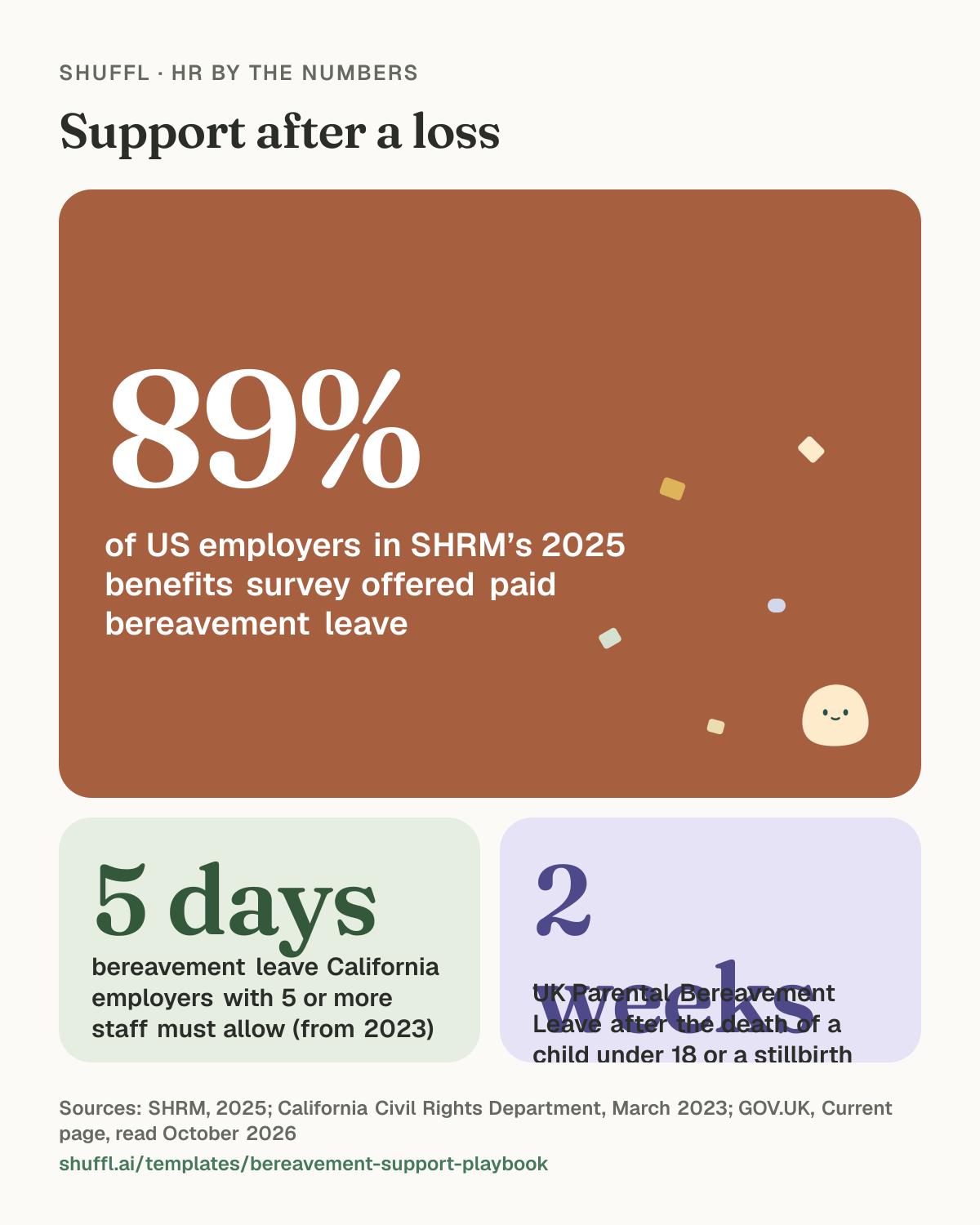
Support after a loss. 89% of US employers in SHRM’s 2025 benefits survey offered paid bereavement leave (SHRM, 2025). 5 days bereavement leave California employers with 5 or more staff must allow (from 2023) (California Civil Rights Department, March 2023). 2 weeks UK Parental Bereavement Leave after the death of a child under 18 or a stillbirth (GOV.UK, Current page, read October 2026).
Support person after their loss
To their manager, on the day they join.
**Support {{hire}} after their loss**

Lift their deadlines and ask what they want colleagues to know. They decide when they are ready to come back.

- [ ] Offer time off and arrange cover
- [ ] Ask what to tell the team, if anything
Bereavement leave for person
To HR, on the day they join.
**Bereavement leave for {{hire}}**

- [ ] Explain their bereavement leave and pay
- [ ] Share any support the company offers
- [ ] Note any flexibility agreed with their manager
We are so sorry, person
To the person, 1 day after the day they join.
**We are so sorry, {{hire}}**

Take the time you need. {{manager}} has your work covered. When you want it, the bereavement policy explains your leave, and HR can answer any question privately.
Check in with person
To their manager, 14 days after the day they join.
**Check in with {{hire}}**

- [ ] Ask how they are and what would help as they return
A gentle check-in with person
To their manager, 60 days after the day they join.
**A gentle check-in with {{hire}}**

Grief does not end when someone is back at work. A quiet word, and flexibility around anniversaries, means a lot.
How to adapt it
- Shuffl fills in {{hire}} and {{manager}} for each person. Replace them by hand if you send the message yourself.
- Change or remove any step to suit the person before you approve it.
- Never ask for proof of a death in the first conversation.
What the research says
Bereavement leave is widely offered. In SHRM’s 2025 survey of 3,969 US organizations, 89% offered paid bereavement leave.1
The amount is usually short. SHRM notes that most companies offer only a few days, and that most policies don’t allow for longer leave for international travel or religious and cultural practices.2 Letting people split their days costs little and helps a lot.
What the law requires
In the US, the Department of Labor says the Fair Labor Standards Act doesn’t require pay for time not worked, including attending a funeral.3 In California, private employers with five or more employees must allow up to five days of bereavement leave for employees with at least 30 days’ service.4
In the UK, employees whose child dies before turning 18, or who have a stillbirth after 24 weeks of pregnancy, can take two weeks of Parental Bereavement Leave.5
Common mistakes
- Asking for a death certificate in the first conversation.
- Sending forms or tasks to the person in the first days.
- Telling the team more than the person wanted shared.
- Assuming they are fine once they are back at work.
Common questions
- What should a manager say when an employee loses someone?
- Say you are sorry, lift their deadlines, and ask what they would like colleagues to know. Let them decide when they are ready to come back.
- How much bereavement leave do employers give?
- Most US employers that offer it give a few days, often more for a close family member. California requires employers with five or more employees to allow up to five days.
- Should you check in after someone returns?
- Yes, gently. Grief does not end when someone is back at work, and flexibility around funerals, memorials and anniversaries costs little.
Sources
Read on . Laws change, so check the source before you act. This page is general information, not legal advice.
- SHRM, 2025 Employee Benefits Survey: Executive Summary, 2025. Online survey of U.S.-based SHRM professional members, Jan. 21 to March 10, 2025; 3,969 organizations; unweighted.
- SHRM, Why Employers Need to Step Up on Bereavement Benefits, June 28, 2024. By Kathryn Mayer; cites SHRM’s 2024 Employee Benefits Survey.
- U.S. Department of Labor, Funeral Leave, Current page, read October 2026.
- California Civil Rights Department, Bereavement Leave (frequently asked questions), March 2023. Government Code section 12945.7, effective January 1, 2023.
- GOV.UK, Statutory Parental Bereavement Pay and Leave: What you’re entitled to, Current page, read October 2026.